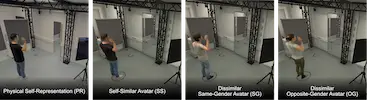
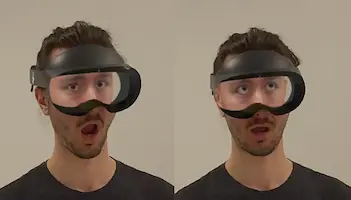
Avatars & Embodiment in VR/AR
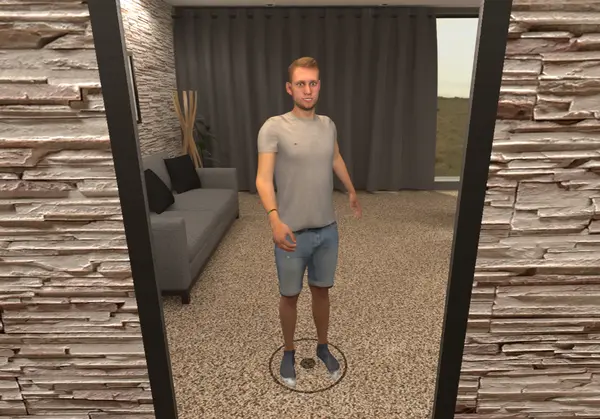
When users embody a personalized, photorealistic avatar in virtual or augmented reality, it changes how they perceive themselves and how they behave. Together with the HCI and PIS groups from JMU Würzburg, we study these effects — and how they can be used, for instance, for body image interventions and therapy.
Involved team members:
Mario Botsch, Stephan Wenninger, Thomas Waltemate, Timo Menzel, Jascha Achenbach
Highlights
-
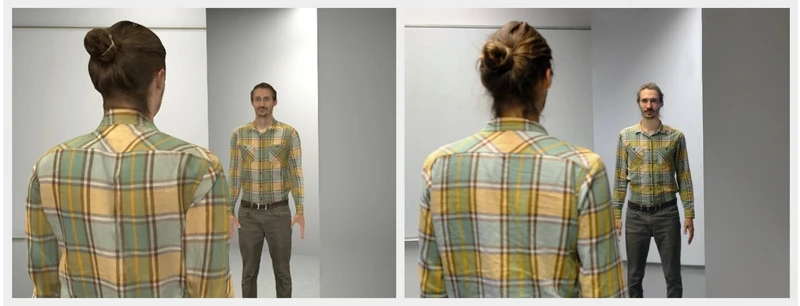
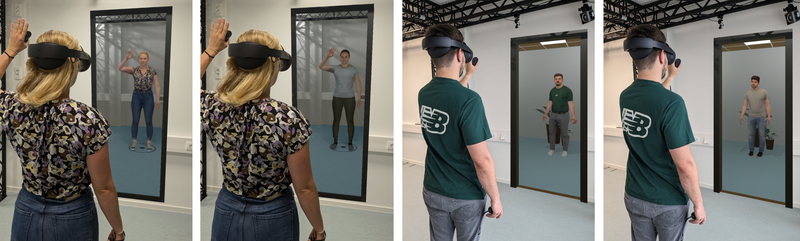 🏆 Best Paper Honorable Mention2025In augmented reality, how much an avatar looks like oneself matters more for body weight perception than control over its movements.
-
 🏆 Best Paper Honorable Mention2023How embodying an avatar in virtual reality affects body awareness, and what that means for our self-experience.
-
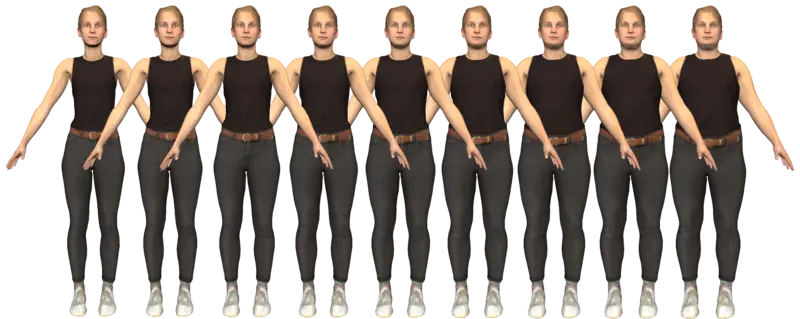 2022Users modify the body shape of their realistic, personalized avatar in virtual reality: exploring the user experience of such avatars for body image interventions.
-
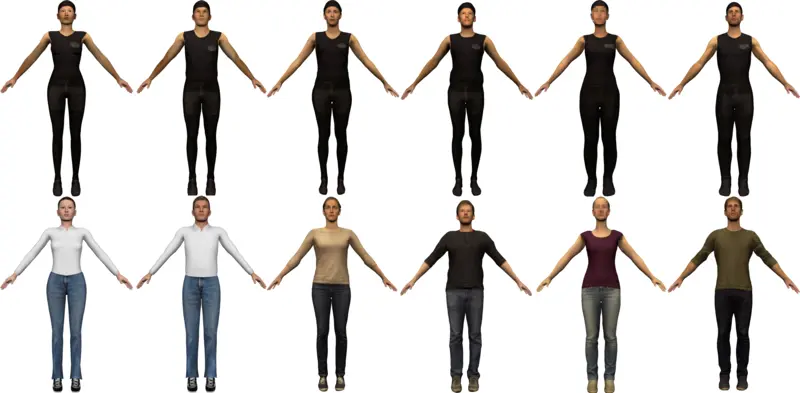 🏆 Best Paper Award2018Personalized, photorealistic avatars strongly increase body ownership, presence, and dominance compared to generic avatars – especially in an immersive HMD setting.
Related Publications
- Virtual Body Image Exercises for People With Obesity – Results on Eating Behavior and Body Perception of the ViTraS Pilot StudyBMC Medical Informatics and Decision Making 25(176), 2025
- The Buffering of Autonomic Fear Responses Is Moderated by the Characteristics of a Virtual CharacterComputers in Human Behavior 168, 2025
- Self-Similarity Beats Motor Control in Augmented Reality Body Weight PerceptionIEEE Transactions on Visualization and Computer Graphics 31(5), (Proc. VR), 2025Best Paper Honorable Mention
- From Avatars to Agents: Self-Related Cues through Embodiment and Personalization Affect Body Perception in Virtual RealityIEEE Transactions on Visualization and Computer Graphics 30(11), (Proc. ISMAR), 2024